Leis (pronounced leh-zsh — you'll also hear it said as Ledge or Lege — and short for Leisure) is a fast-paced 2 v 2 drinking game where players take turns using wooden rackets known as paddles to set & attack a ping-pong ball as it moves back and forth across the table during a rally. During a rally each team gets a chance to perform a single set and a single attack before the opposing team takes possession and does the same. Rallies start with a serve and continue until a player faults or a team scores points. When a rally ends the ball is re-served and a new rally begins. If a team scores a point the opposing team drinks a quarter of a beer. This is known as "drinking the points." There is no limit to the number of rallies that can occur in a single game. The first team to reach 8 points (2 beers) wins the game.
If you've never picked up a paddle before then this guide is for you. We'll go over everything you need to know when getting your group up to speed and ready for the show.
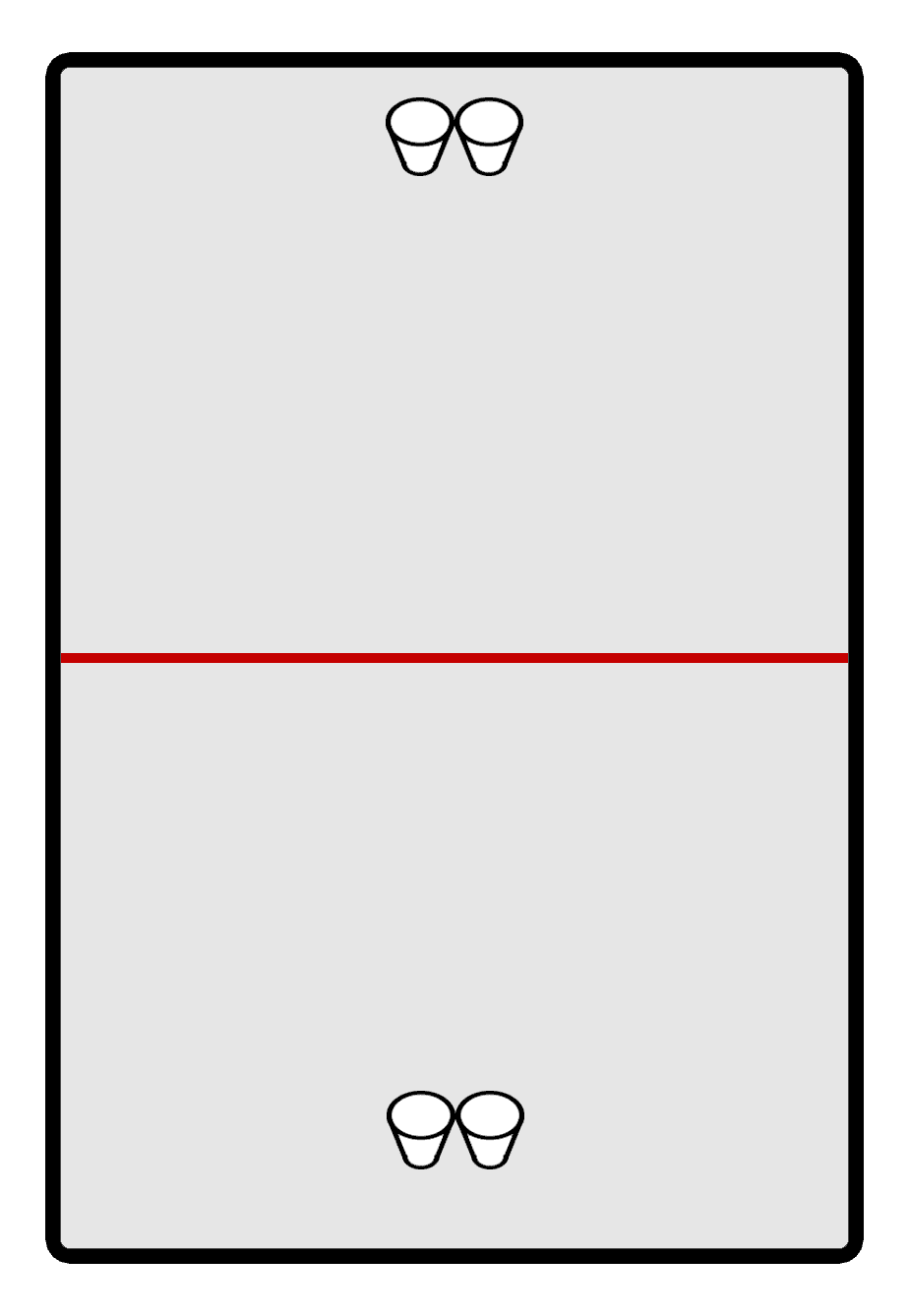
Pick a solid table that a ping pong ball will bounce well on. Any table will do, but we've found that a rectangular table of roughly 4' x 6' in dimensions, standing at roughly waist height, will work best. As a general rule of thumb a smaller table will result in a faster, more challenging game, and a larger table will result in a slower and more forgiving game. For beginners a full size 4' x 8' sheet of plywood can be a great place to start. When setting up the table, we recommend you mark the center line. This helps determine which side of the table belongs to each team and reduces ambiguity while playing. You can mark the center line with paint, a strip of tape, or by simply placing your empty drink cans as a wall along the center of the table. Place 2 pint glasses on each side of the table (side-by-side with the rims touching). They should be placed roughly 8 inches from the back edge of the table. Once placed, fill each cup fully with a fresh drink.
The paddle is the defining symbol of LEIS. It is the only thing allowed to touch the ball once a rally is live. A LEIS paddle is typically a rectangular plank of wood, sized to be comfortable when held in the palm of your hand. Since there is a tradition for players to craft their own personal paddle, the styles of a paddle can vary greatly by preference and available materials. What matters most is that you find a paddle that you can comfortably hold in one hand, and has at least one flat face. Players have been known to make paddles by cutting blocks out of plywood, cutting the handles off of ping pong paddles, or even using phone screens in a pinch.
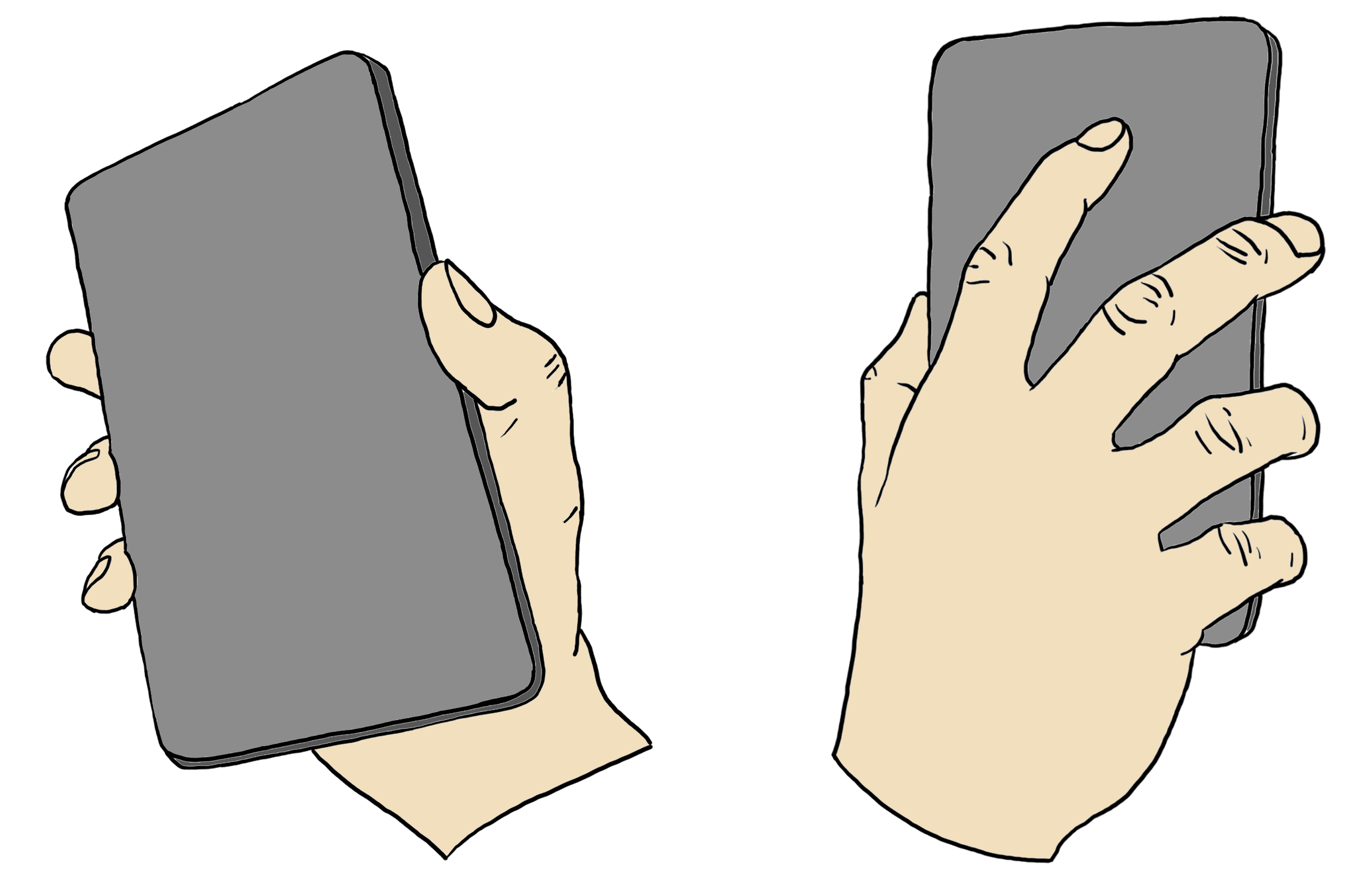
Hold the paddle flat in the palm of your hand with your index finger bracing the back. This grip gives you the control you want for underhand hits, and it is the one to learn first. You may find yourself needing to shift to other grips as a rally progresses. LEIS is a dynamic game and your grip should evolve as the game situation demands it.
In LEIS, overhand swings are forbidden. Every contact that you make with the paddle must be performed with an underhand movement: the ball meets the top face of the paddle and leaves on an upward or horizontal arc. This rule exists to reduce ball speed during a rally and ensures that the ball remains playable for a more interesting game.
There are two exceptions to the "underhand only" rule:
Each hit should be a single, clean tap. If the ball does not rebound cleanly from a hit, or makes a dull sound, something has probably gone wrong. Each of these is an illegal contact, and each one ends the rally the moment it happens:
You go to hit the ball and it bounces off your paddle more than once in the same motion.
You scoop, push, or carry the ball instead of striking it cleanly. Listen for the missing tap.
Your thumb or fingers touch the ball while you are trying to make contact with the ball.
Unlike most drinking games, LEIS will require you and your partner to take on fundamentally different, yet equally important roles: The setter and the attacker.
This player stands next to their team's own cups, and is responsible for playing defense after the opponent attacks, setting the ball across the table to their partner, and starting rallies by performing serves. A good set makes the attack look easy.
This player stands next to the opponent's cups and waits for their partner to set them the ball. When a set comes in, the attacker hits the ball out of the air at the opponent's cups in an attempt to score points.
It should be noted that the game can take on a very different feel depending on which position you choose, and this is often a major hurdle that new players must overcome. To make the process of learning easier, most new players choose to pick a single position and master it before transitioning to the other.
A single game of LEIS consists of many rallies where teams trade off on trying to score points on their opponent. A rally starts with a serve and ends when points are scored or a player faults. There is no limit to the number of rallies that take place in a given game. Every rally always flows in the same pattern between setters and attackers. Players can expect to play the ball in exactly this pattern:
Decide on teams then decide which player on each team will be the setter and which will be the attacker. To decide where each player should stand, follow these steps:
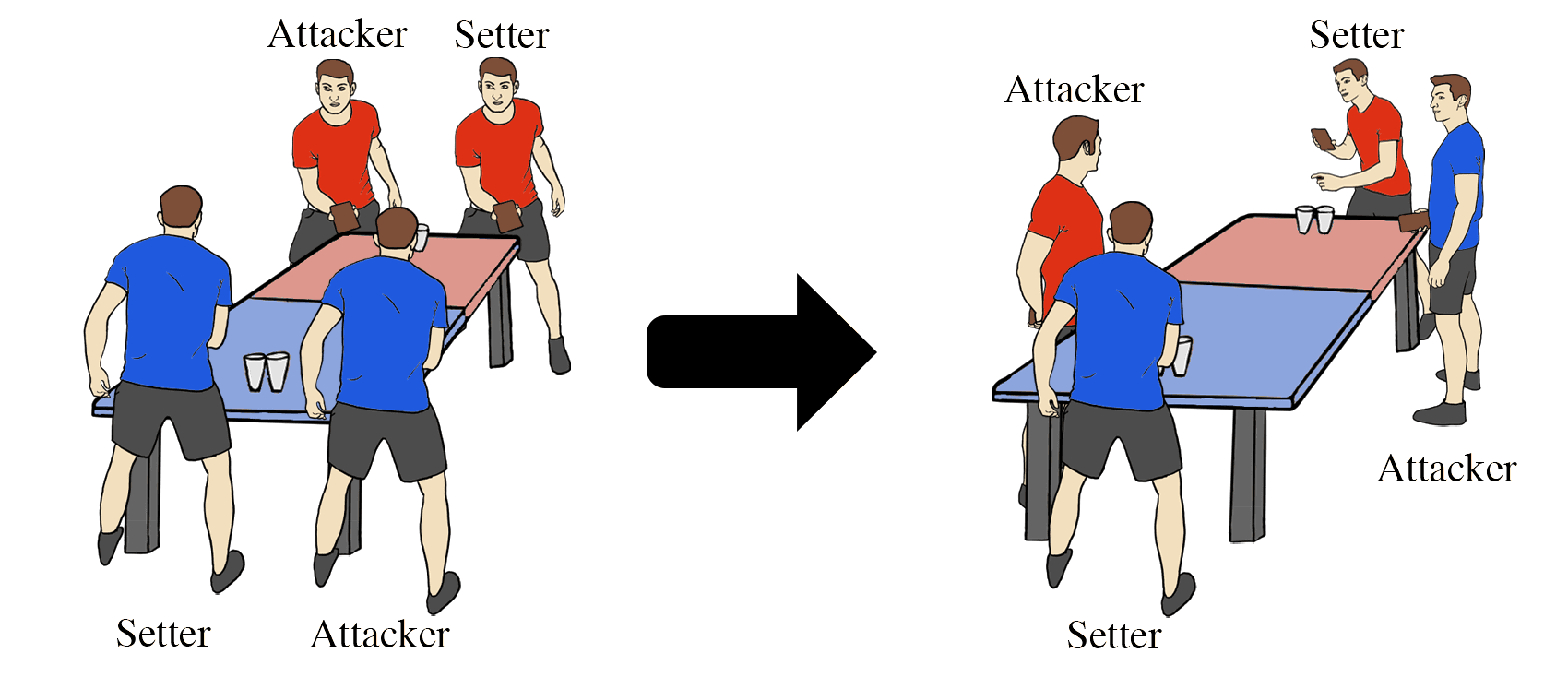
Decide which team will serve the first rally and give the ball to that team's setter. Serves will always be performed by the team's setter.
The server must start the game from the short edge of the table behind their opponent's cups. While the server is getting into position, the serving team's attacker must take the position of a "LEIS Post" by pressing their hips against the table, standing with a straight back, and locking their hands behind their back. As a LEIS Post, the attacker must remain fixed in this position (without any movement) until the other team returns the serve. This odd position that the attacker takes for a serve exists to act as a form of passive interference against the receiving team. They essentially become a backboard that their teammate will aim at when serving. A good serve will almost always bounce off the LEIS Post, and this is the only point in a rally where the ball is allowed to touch a player directly instead of their paddle.
The receiving team's setter will stand directly opposite from the server behind their own team's pint glasses and should be prepared to receive the ball. The receiving team's attacker does not need to do anything yet, since they must wait for their setter to receive and pass the ball to them, at which point they will attempt to score points.
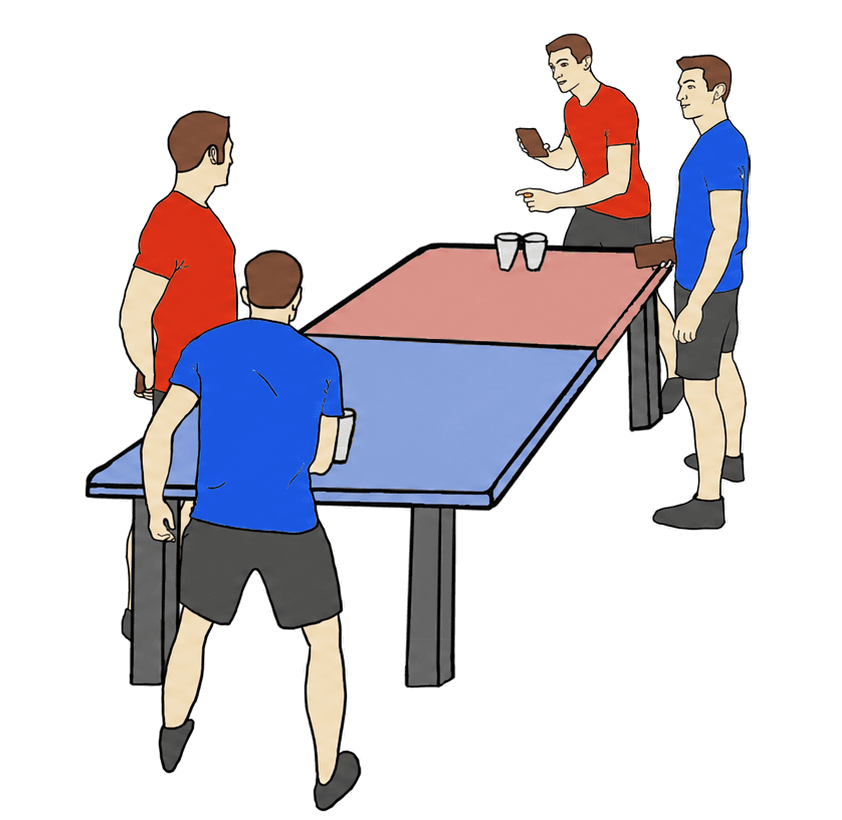
To begin the rally, the server will hit the ball downwards (overhand motion) and towards the other team's side of the table where the receiving team's setter is waiting to return the serve. This is the only overhand swing you make all game. The ball bounces once on the server's side of the table, clears the center line, then bounces once on the far side. The server should aim for the serve to hit their LEIS Post, and the LEIS Post must remain still until after the ball is returned. A serve that hits or rolls off of a LEIS Post will always be significantly harder for the receiving team to handle. The ball may touch the LEIS Post at ANY point in the serve, so long as the following criteria remain true:
As soon as the ball hits the receiver's side of the table it is considered to be a successful serve, possession of the ball transfers to the receiving team, and the rally begins. If a server fails to perform a successful serve (above criteria not met) 3 times in a row, then it is considered a "service fault" and the receiving team is awarded a free point.
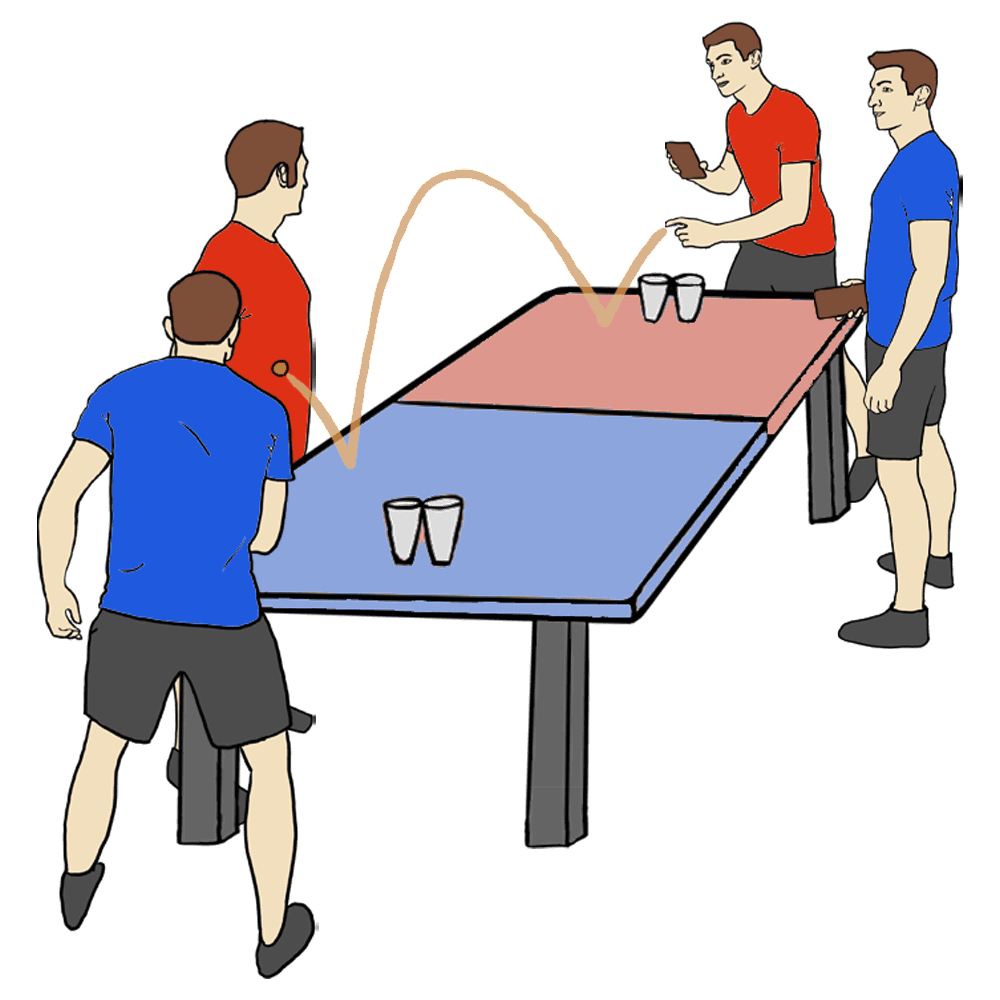
The instant the ball lands on the receiver's side of the table, the receiving team takes "possession" of the play and the setter is now responsible for performing their first "set". To set the ball, the player must use an underhand hit to send the ball through the air and back across the table at their attack-ready partner.
It is likely that the setter will find the LEIS Post to be very much "in the way" since a good serve will almost certainly hit (or even roll) across the body of the LEIS Post player. The setter will need to find a way to work around the limitations that this imposes on them. If the ball is rolling across the LEIS Post's body the setter is allowed to make light contact with the other player, provided it is in the action of performing the set, does not require excess force that could injure another player, and still results in a clean bounce off the paddle.
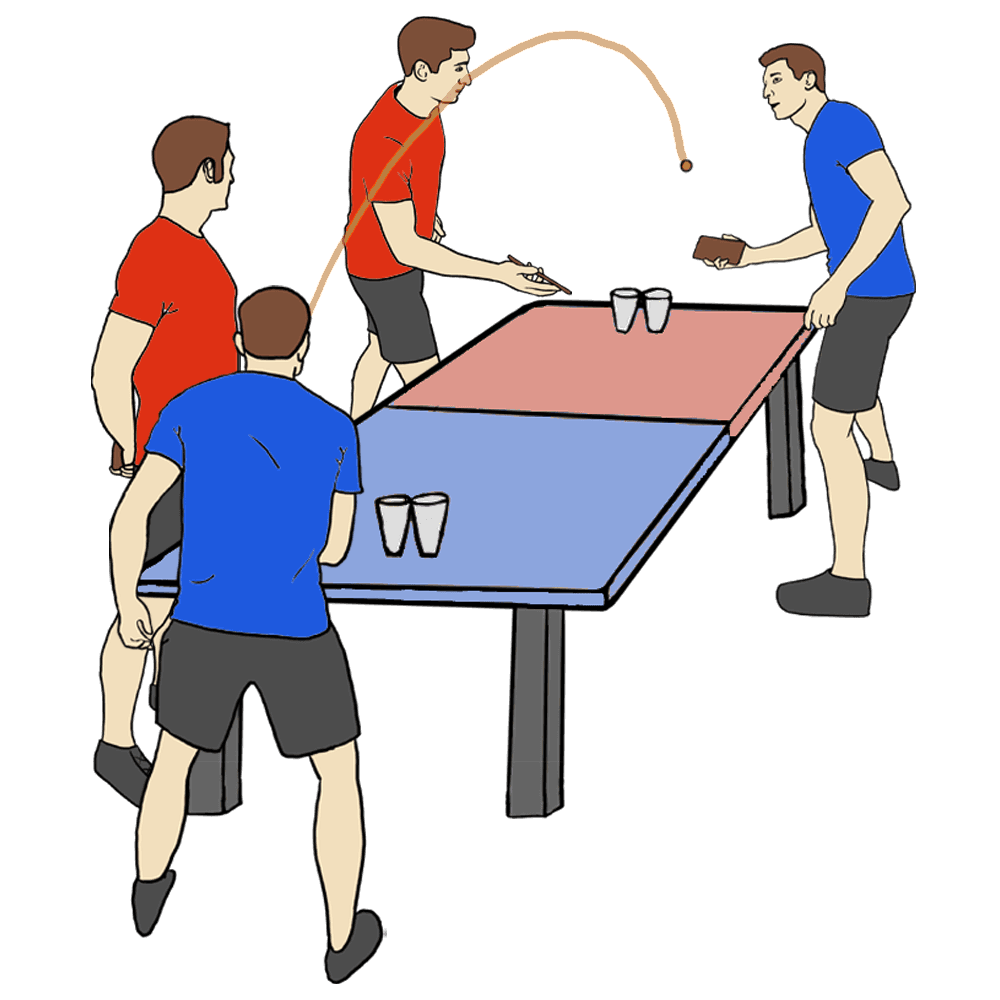
After the set, the attacker must now hit the ball (underhand) at the opponent's pint glasses. The attack must contact the ball out of the air, before it bounces on any other surface. This is where the game can diverge down a few different paths. It's possible that the attacker fails entirely and the rally ends, the attacker scores points for their team, or the attacker simply keeps the ball in play so the rally goes on.
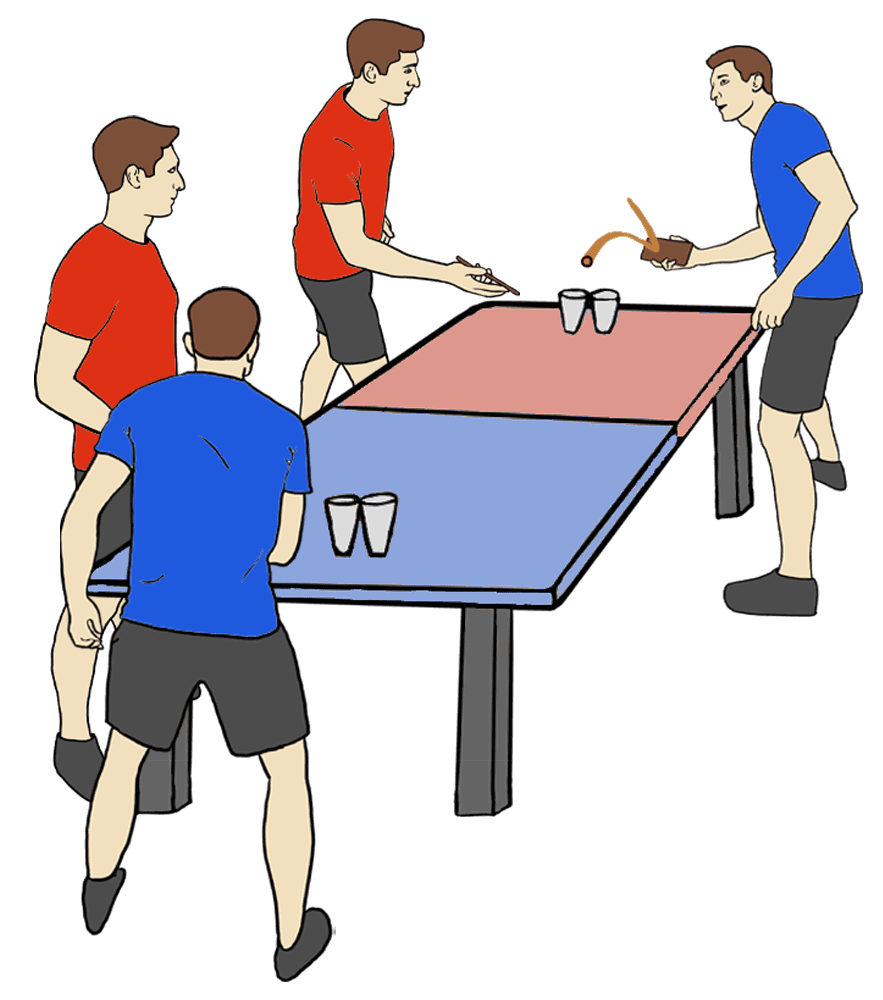
The rules get complicated here, and diverge slightly depending on how well the attacker performs their strike. We will cover these events in order of least complicated to most complicated.
The attacker hits the ball and it lands inside the opponent's pint glasses. This ends the rally immediately and is a +2 point (1/2 beer) score for the attacking team.
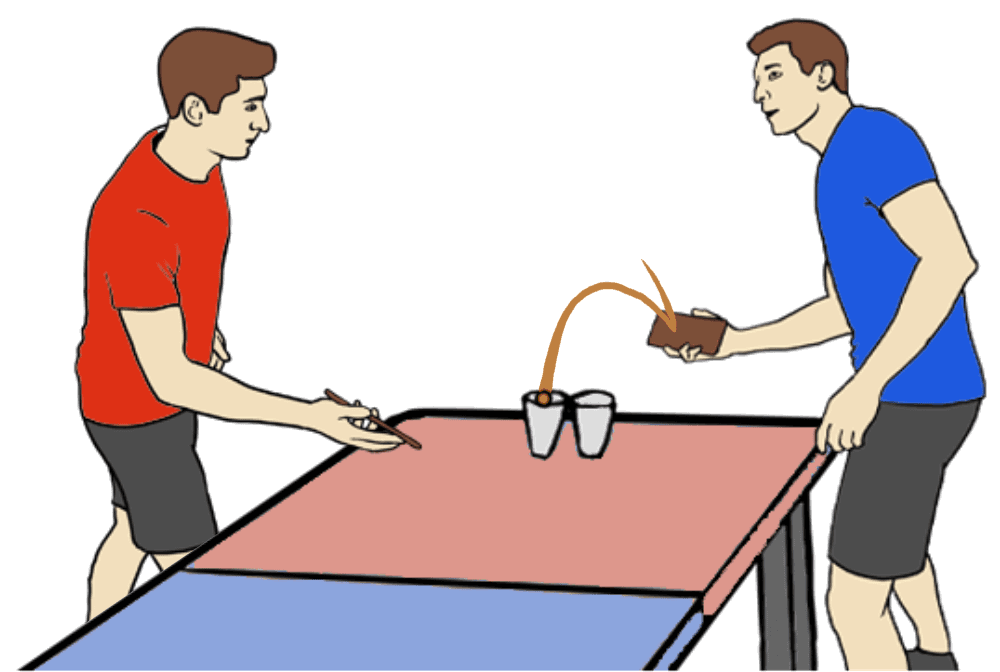
The attacker hits the ball and misses the pint glasses, but the ball lands "in play" on the opponent's side of the table. Although no points are scored, it closes out a valid "no-fault possession" for the attacker's team. After the ball bounces on the table, possession of the play transfers immediately to the opposing team for the rally to continue, and saves the attacker's team from needing to serve the next rally. When the new team takes possession, their setter must perform a valid underhand set back to their teammate in order to continue the rally. In this way, both teams can have the opportunity to score points in any given rally, and a rally can carry on indefinitely until a player faults and the ball must be re-served.
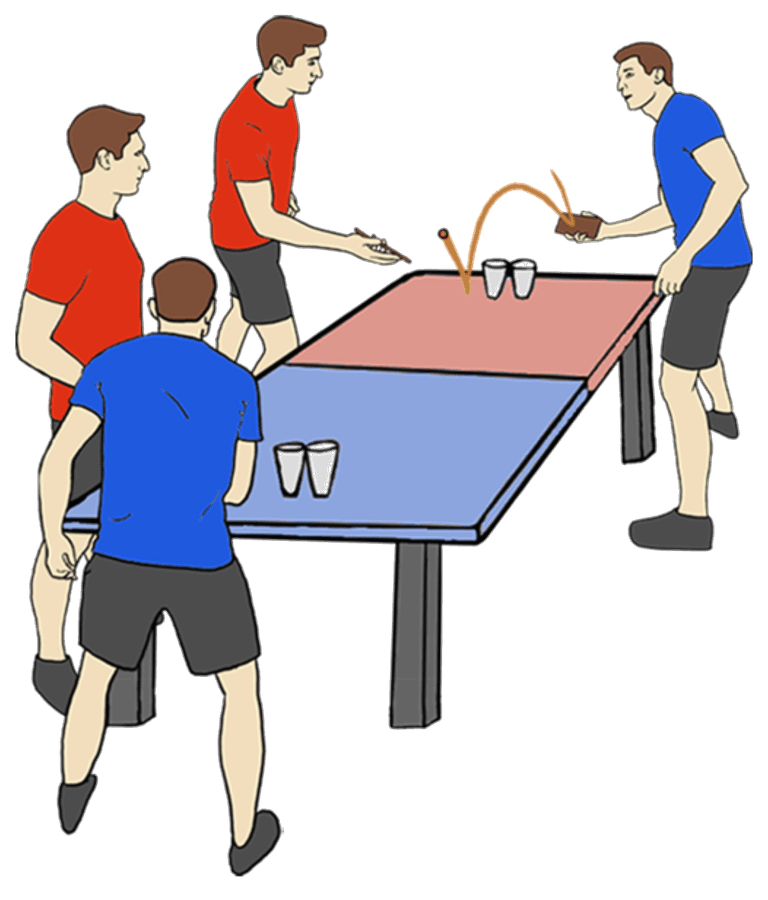
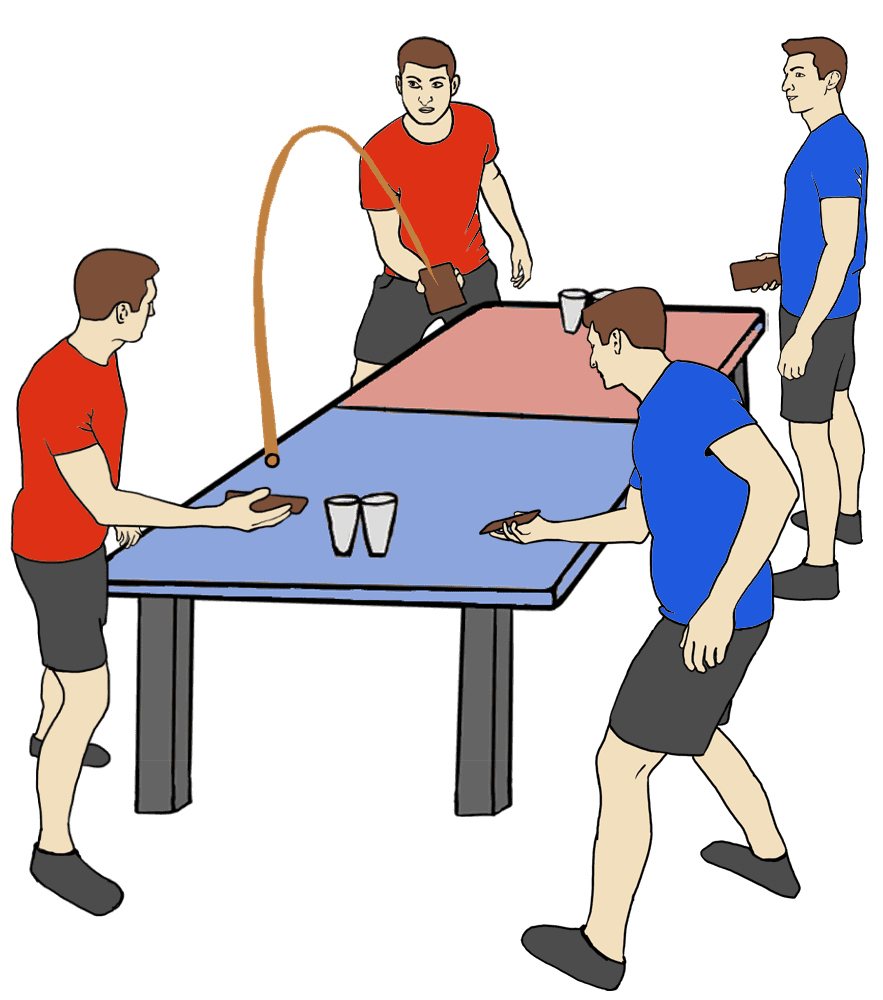
The attacker hits the ball and the ball bounces off the top rim of the opponent's pint glasses. This is a +1 (1/4 beer) point for the attacking team. However, since the ball never stops moving like it did for the +2 sink score, the rally is NOT immediately over on a +1 point attack. Rather, the point is considered to be "staged" but not "confirmed" and the rally continues on.
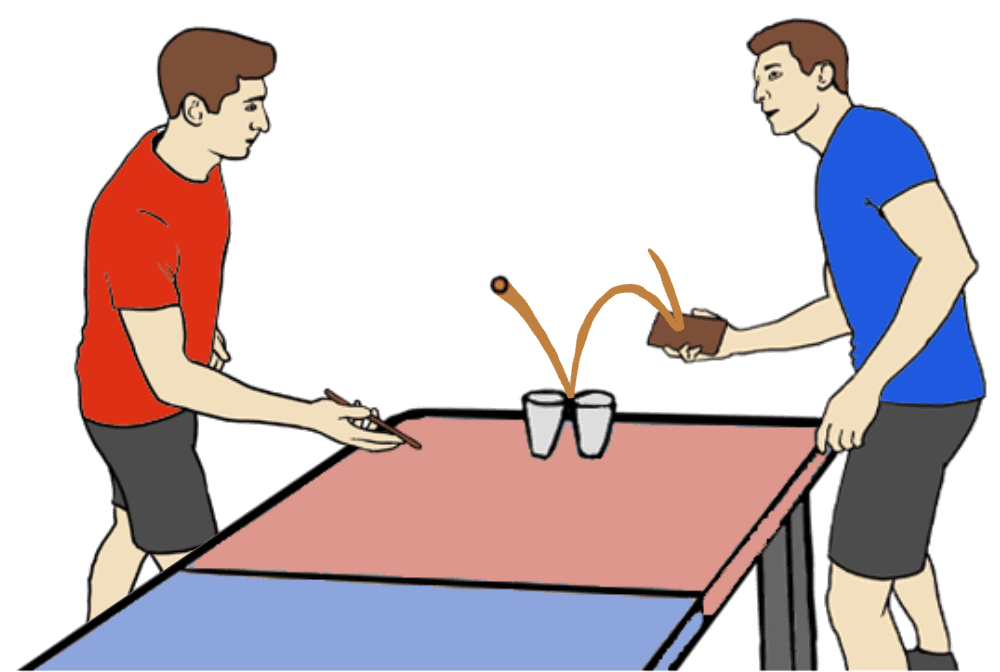
This is where a good setter on the opposing team can make a defensive play to try and cancel out the staged point entirely. To clear the staged point, the defending team must keep the rally alive for one full possession:
If the new team commits a fault in this process, or fails entirely, then the rally ends and the staged +1 point is officially awarded to the attacker's team. If they are successful, then the rally continues on as if the staged point was never scored in the first place.
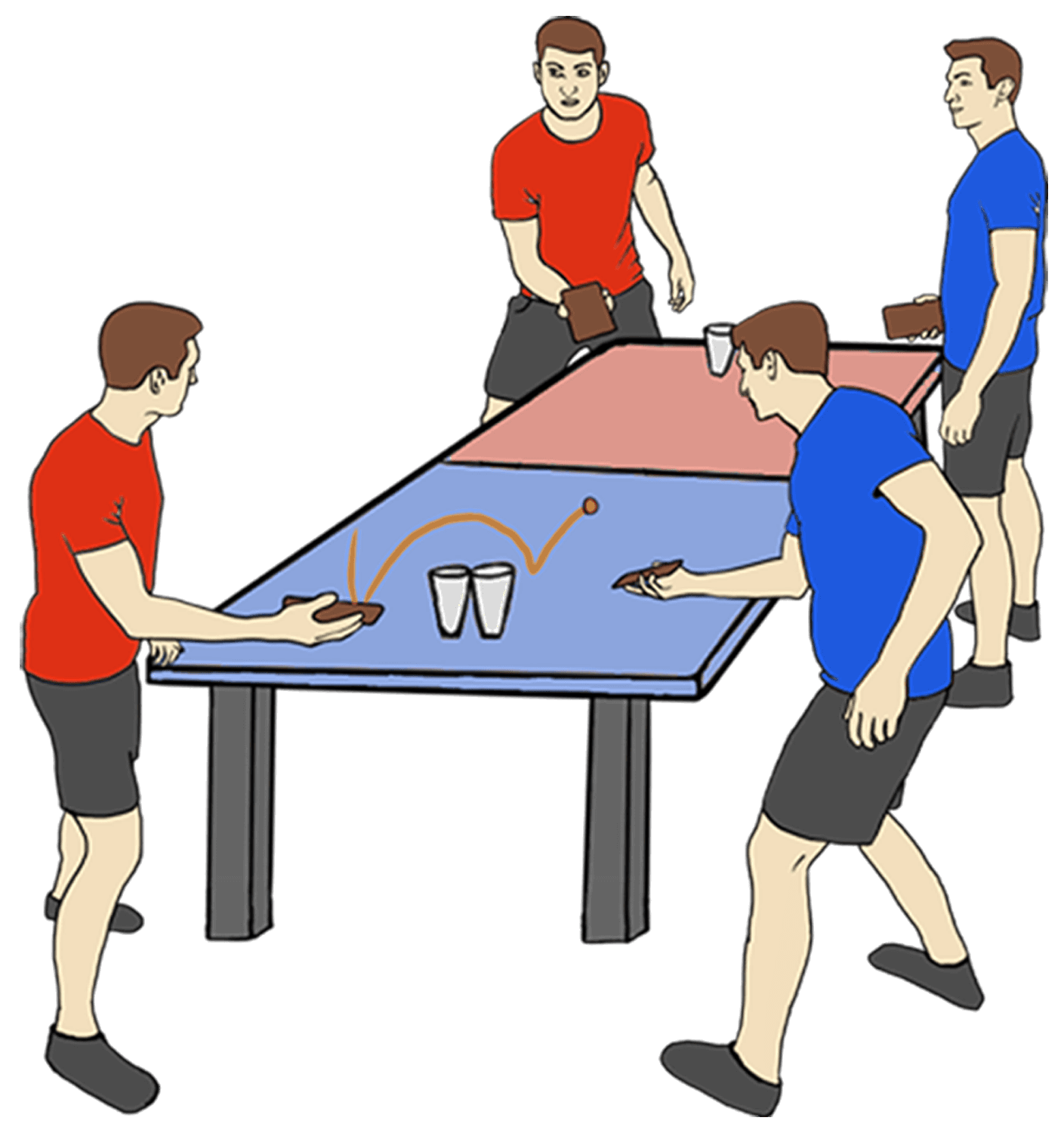
Walk the whole rally at your own pace. Advance one move at a time, and when the strike forks, pick which outcome you want to follow. Restart back to the serve whenever you like to simulate a fault.
Every rally starts here — the serving team's setter has the ball, their attacker locks in as the LEIS Post, and the receiving setter waits behind their own cups.
When a player faults, the rally dies and their team has to perform the next serve, ultimately giving the opponent the first chance to score on the next rally. Since serving is a disadvantage, mistakes cost you. This section helps you understand what moves are clearly labeled as faults.
Leis is a fast-paced 2v2 drinking game played with wooden paddles, a ping-pong ball, and four pint glasses. Two teams of two rally the ball across a table and try to land it in the opponents' cups — sink a cup for 2 points, clip the rim for 1. The first team to 8 points wins, and the losing side drinks the points.
Leis is pronounced "leh-zsh" and is short for "Leisure." Because of how it sounds out loud, people often say it like "Ledge" or "Lege" — it's all the same game.
Yes. "Ledge" and "Lege" are just how the name Leis sounds when it's spoken, so anyone searching for the "Ledge drinking game" or "Lege drinking game" is looking for Leis. The game's name is Leis, short for Leisure.
Some players know Leis as the "sailor drinking game" or the "sailing team drinking game." If that is the name you searched for, you are in the right place — the rules on this page are the game you are looking for.
If you want a drinking game that rewards skill over luck, Leis is hard to beat. Unlike games that come down to a single lucky toss, Leis is a continuous 2v2 rally that tests hand-eye coordination, teamwork, and strategy between a setter and an attacker. It is easy to learn, endlessly replayable, and every point is earned in a live rally.
To play Leis you need four players (two teams of two), one ping-pong ball, four 16oz pint glasses, four flat hand-held paddles, and a solid, level table with a true bounce and room overhead for the ball to arc across.
Leis is played 2v2, so you need four players — two teams of two. Each team has one setter (who plays defense and passes) and one attacker (who strikes at the opponents' cups).
You know the rules. Now round up a table, grab your paddles, and go win a rally.